Theropods Honors The Legacy Of Adventure Games Without Muttering A Single Word
Lost Token explains how it created one of the best point-and-click adventure games in years.

Welcome back to Remastered! This week, I have a great story about the development of Theropods, one of my favorite retro-inspired games so far this year. Lost Token was very insightful, revealing some things about its 10-year development and game jam origins that I didn’t know before.
If you aren’t subscribed already, consider signing up to the Remastered newsletter for free. You can also support me on Ko-fi.
How To Make A Point-And-Click Adventure Game Work Without Dialogue
Theropods on SteamPoint-and-click adventure games have an important place in gaming history. In the nascent days of the medium, games from LucasArts, Sierra, and other adventure game makers were trailblazers in storytelling, puzzle design, and pushing the limits of how players could interact with games. Oftentimes, it is a pretty verbose genre. LucasArts point-and-clicks, in particular, are fondly remembered for their witty dialogue that outright made the careers of designers like Ron Gilbert and Double Fine’s Tim Schafer.
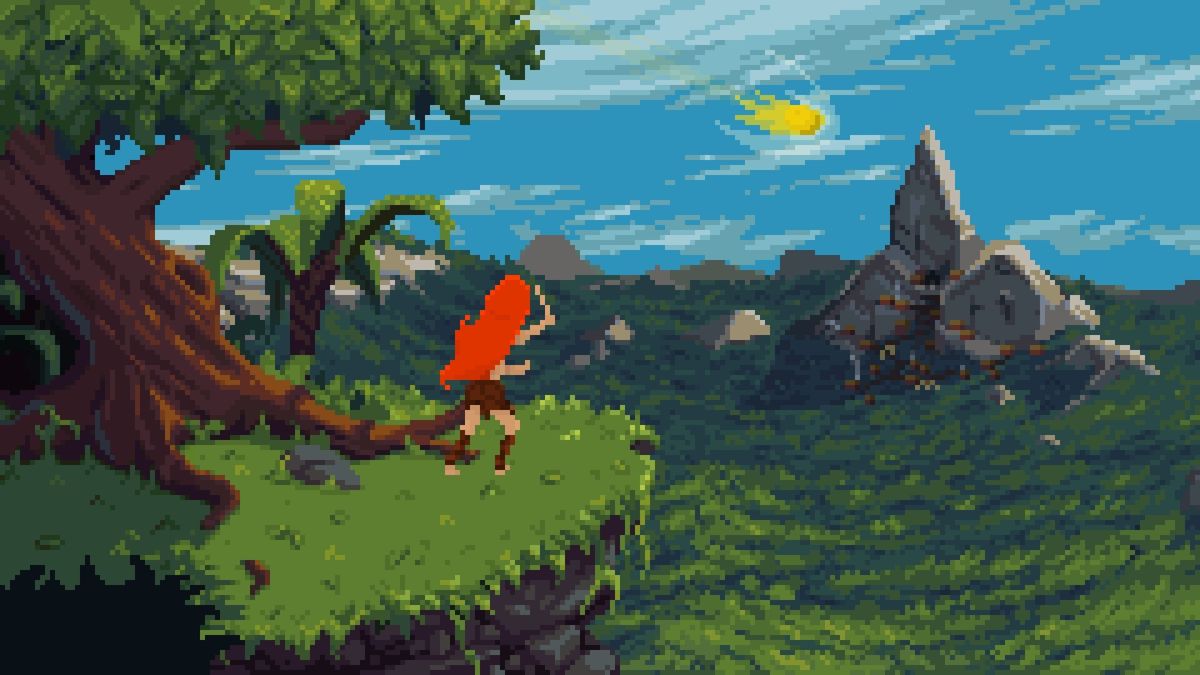
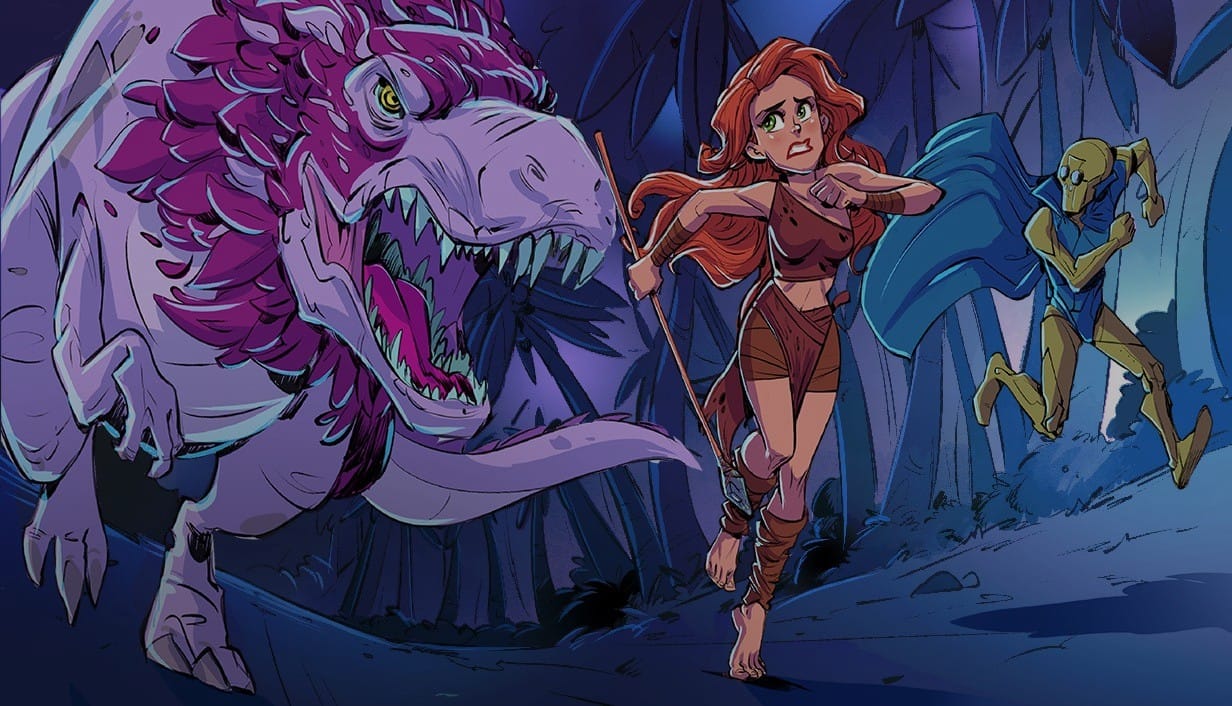
Lost Token’s Theropods feels like a love letter to that era of adventure games with its amazing pixel art and sense of humor, but this prehistoric point-and-click (with sci-fi) adventure drops dialogue in favor of pantomime and grunts to tell its emotional, compelling story. Without a single word, it is a consistently engaging adventure game with clever puzzles that never feel too obtuse or complex. On top of that, it sports some of the best hand-animated pixel art I have seen in a game this year. It's an impressive final release that comes from humble origins.
Theropods began with two college students who grew up playing classic point-and-click adventure games like The Secret of Monkey Island, Full Throttle, Grim Fandango, and Machinarium. “We were out of college studying animation, and we mainly created short films where there was no dialogue or text, mainly to avoid the hassle of recruiting actors and writing dialogue,” Lost Token developers Kostas Skiftas and Sarah Duffield-Harding explained in an email interview. “So we trained ourselves in visual storytelling. When we decided to get into game development and transfer our animation and storytelling skills there, a wordless point-and-click game seemed like a good idea.”
In 2015, the Lost Token crew participated in the Adventure Game Jam, a two-week competition in which groups of developers could work together to create proof-of-concept adventure games. Skiftas and Duffield-Harding were initially working on different games, with what would become Theropods apparently having “vector-style art” and “blocky color” when Skiftas was working on his own.
Duffield-Harding’s game jam team plans fell through at the last-minute, so she joined Skiftas. Theropods then turned into a pixel art game. “Kostas still worked on all of the animations, handing the black-and-white lineart to Sarah to turn into pixels,” Lost Token recalled in the email Q&A. “The same workflow was adapted for the full game.”
Most of the time, game jam projects are brief affairs that never see commercial release. Or if they do come out, it is not until after a decade of additional development. In Theropods’ case, Lost Token did stick with it. Skiftas and Duffield-Harding brought in more development help to rebuild and expand the point-and-click adventure game into something that could stand alongside genre greats.
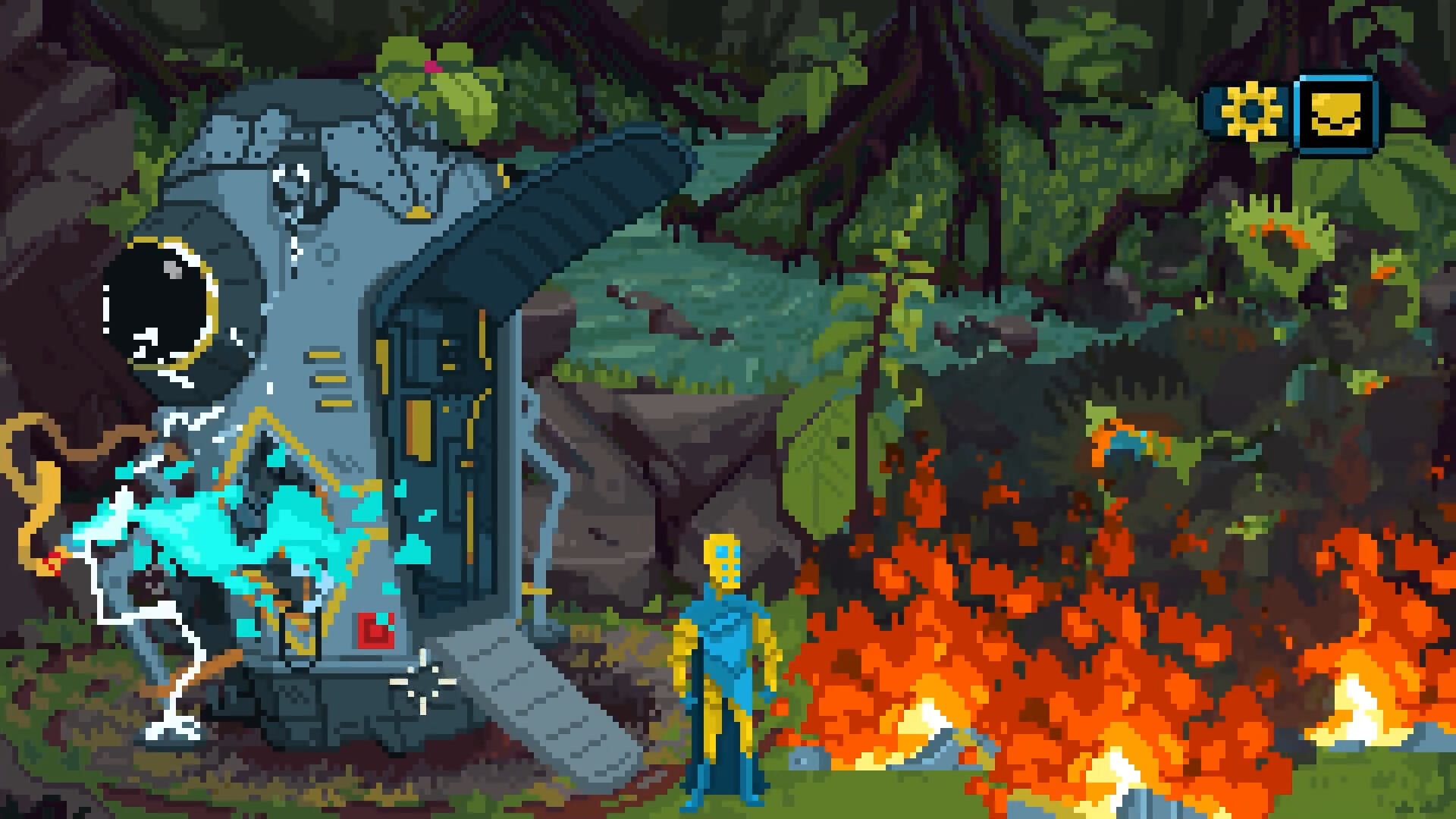
The two big challenges Lost Token faced during development, from a design standpoint, were creating the intricately detailed pixel art Theropods required, and creating a discernible and enjoyable puzzle game without relying on witty writing or text to direct the player toward what to do next. On the pixel art front, Matt Frith joined the team as a background artist and lead programmer, helping Duffield-Harding create and implement pixel art based on Skiftas’ animations by using programs such as Aseprite and Pixaki.
Surprisingly, some lessons learned during the Adventure Game Jam helped Theropods’ small development team understand what they actually needed to focus on or create to make a game that looked great. Lost Token explained:
“Initially, Kostas spent way too much time creating frames for each animation. We discovered very quickly that we would never finish the game jam with that amount of frames. We started deleting frames from already done animations, seeing what was the least amount we could get away with and still maintain some convincing movement. We discovered that pixel art games can get away with a lot on a low resolution. Super Mario’s run animation only uses 2-3 frames, so we followed that philosophy and became as economical as possible in our approach.”
With that process established, Lost Token knew what they had to do to make a game that looked good. Making a point-and-click adventure game without dialogue that is still fun to play was equally difficult. Lost Token was thankful to have games it could use for inspiration on this front. In terms of telling great stories without words, the studio looked to classics like Limbo, Inside, and Brothers: A Tale of Two Sons. On the point-and-click front, it looked at Amanita Design’s games, like Machinarium and its Samorost series.
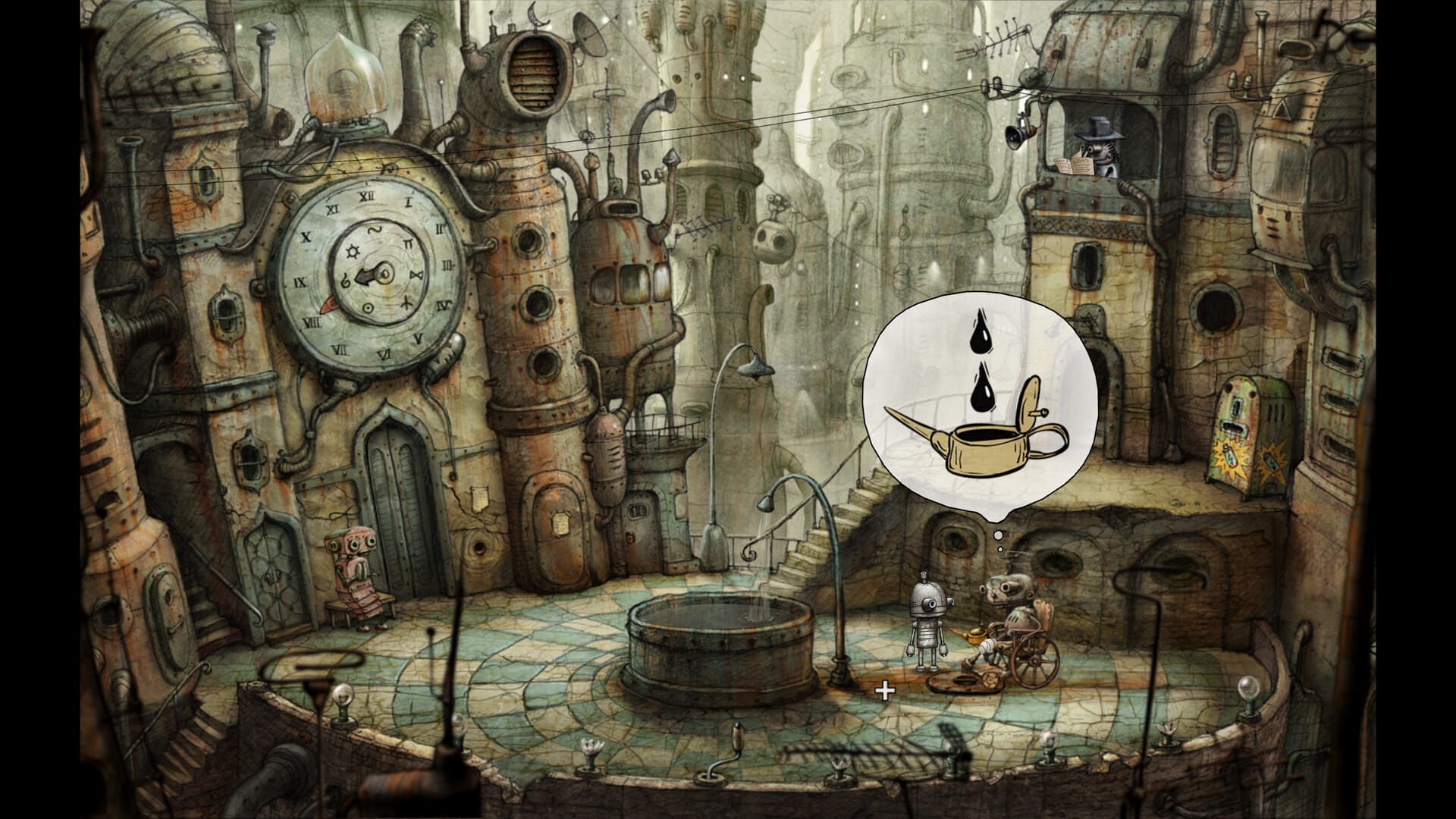
Theropods’ intentionally low-resolution pixel art visual design meant it could not copy Amanita Design’s image-based approach pictured above beat-for-beat. “If you strip all that [textual and vocal feedback] away, all you have are animations and sounds to give feedback,” Lost Token explained. For example, instead of a thought bubble telling players they need a key to unlock a door, Lost Token explained that this same situation in their game would require an exaggerated action of the player struggling to open the door, grunting or murmuring a “hmm” sound in response to make the player understand unlocking the door is the main objective.
From there, players can search for the key to unlock the door, solving a puzzle without anyone ever giving them an explicit hint or a character saying they cannot find a needed key outright. Of course, this approach has drawbacks of its own, like making an area too big or adding too many things to do or interact with.
“This is a common problem in all adventure games, let alone wordless ones,” Lost Token admitted. “To solve this, we gave the player small rooms and areas to explore, creating tiny escape rooms in each situation. That way the players wouldn't get stuck for too long and essentially play a string of smaller puzzles of varying levels of difficulty.”
Having played Theropods, I can say Lost Token found a good balance for this. While I still had to spend a little bit of time in each scenario to work out what I had to do, the areas were small enough that I never felt overwhelmed. I could also press a button to see what I could interact with. That definitely helped. If I interacted with each spot enough using items from my inventory, I could grok the solution to the puzzle.
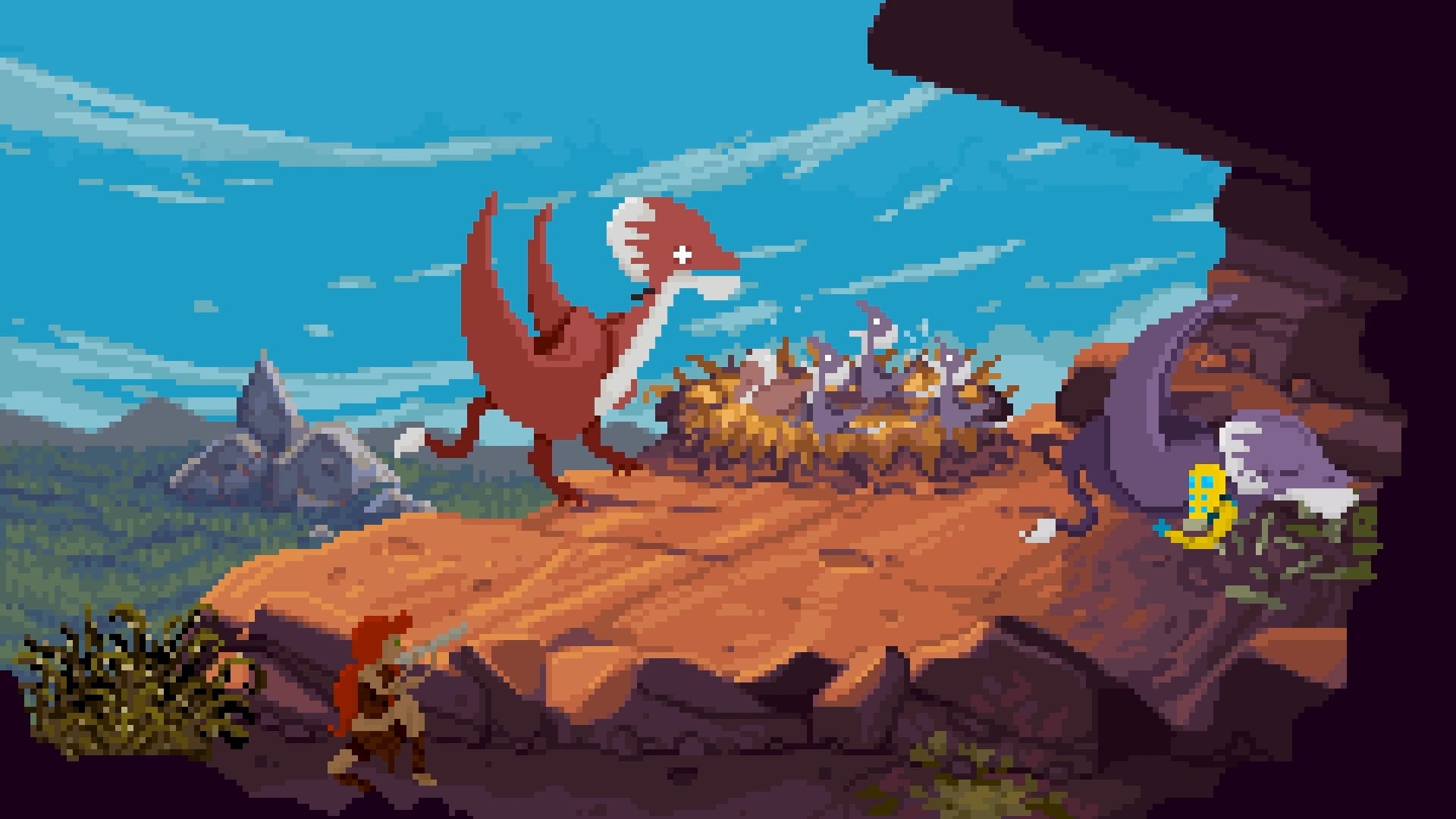
Moments like that are what make adventure games or puzzle games like Theropods so satisfying. As a player, they make you feel smart when you have just solved a problem that the developer very intentionally crafted. Theropods features moments like these in spades, and it is part of why I find the game so incredibly charming. “With every game, of course, it's a matter of gameplay and whether the game is fun or not,” Lost Token wrote to conclude the email Q&A. “Everything else is just the package. A game needs to be fun above everything else.”
In execution, Theropods definitely is fun. It has all the hallmarks of a retro throwback, but it ends up a step beyond others thanks to its wonderful animation and really thoughtful puzzle design necessitated by a lack of dialogue. Theropods looks incredible and makes me actively feel both intellectually challenged and fulfilled when playing it. That was the result of over a decade of work based on an idea from a quaint game jam, and decades of its developers playing the point-and-click adventure classics that are still beloved today.
Theropods is now available on Steam.
What's Old Is News
James Pond Legacy: The Pond Is Not Enough AI controversy and more
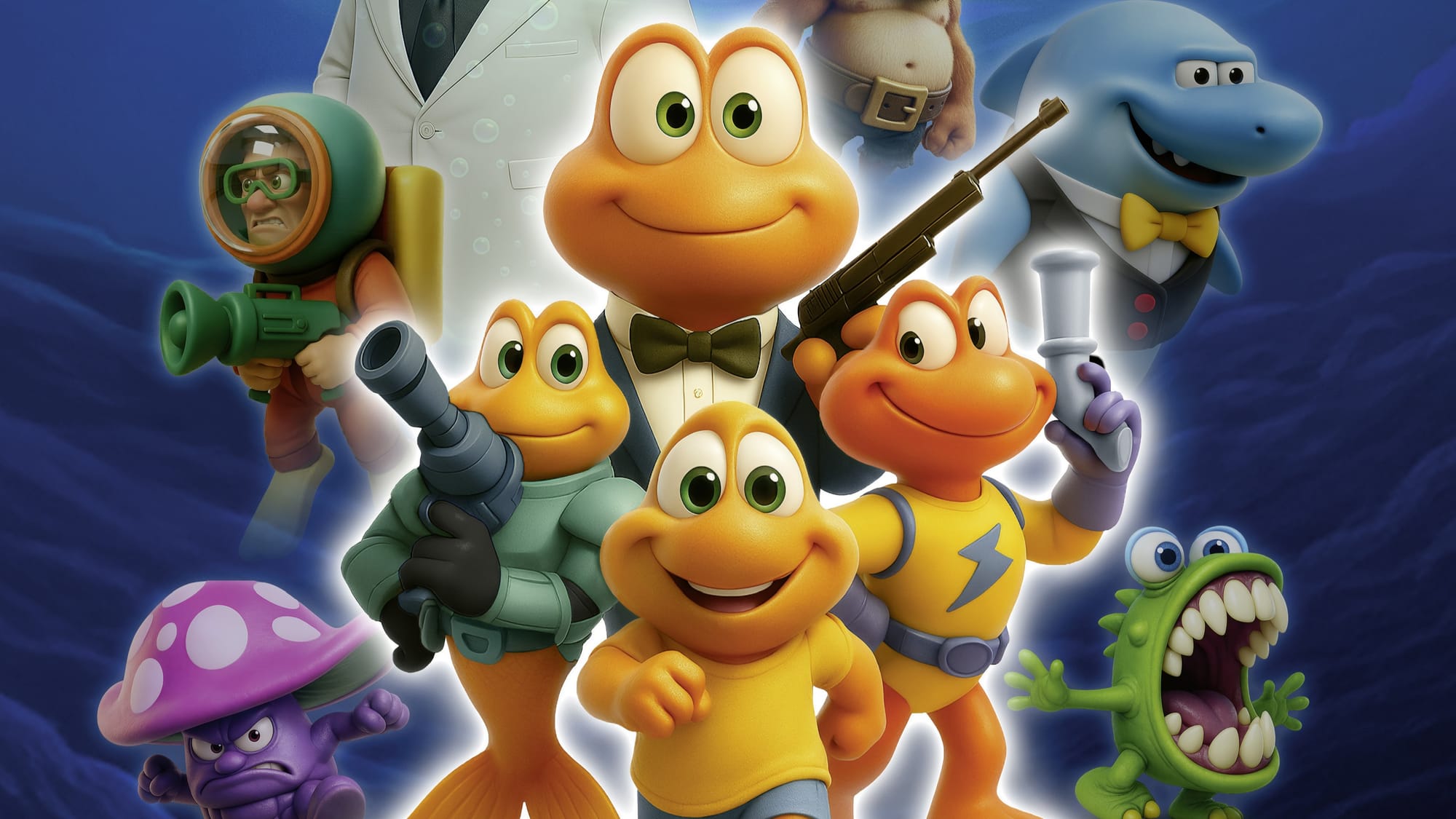
- System 3 announced that James Pond Legacy: The Pond Is Not Enough, a collection of parody retro games about a fish that acts a lot like James Bond, would be released for Nintendo Switch 2 in October 2026. System 3 has previously been accused of using generative AI to create key art for their games, per Time Extension, and the key art for James Pond Legacy (pictured above) and the original song created for its latest trailer certainly set off some AI red flags. The developer denies using it, though.
- “We can confirm from System 3 that no generative AI was used to create the key art, trailer, or the 'Maybe' song,” a PR spokesperson for System told me. “There was no use of generative AI in the development process as well.”
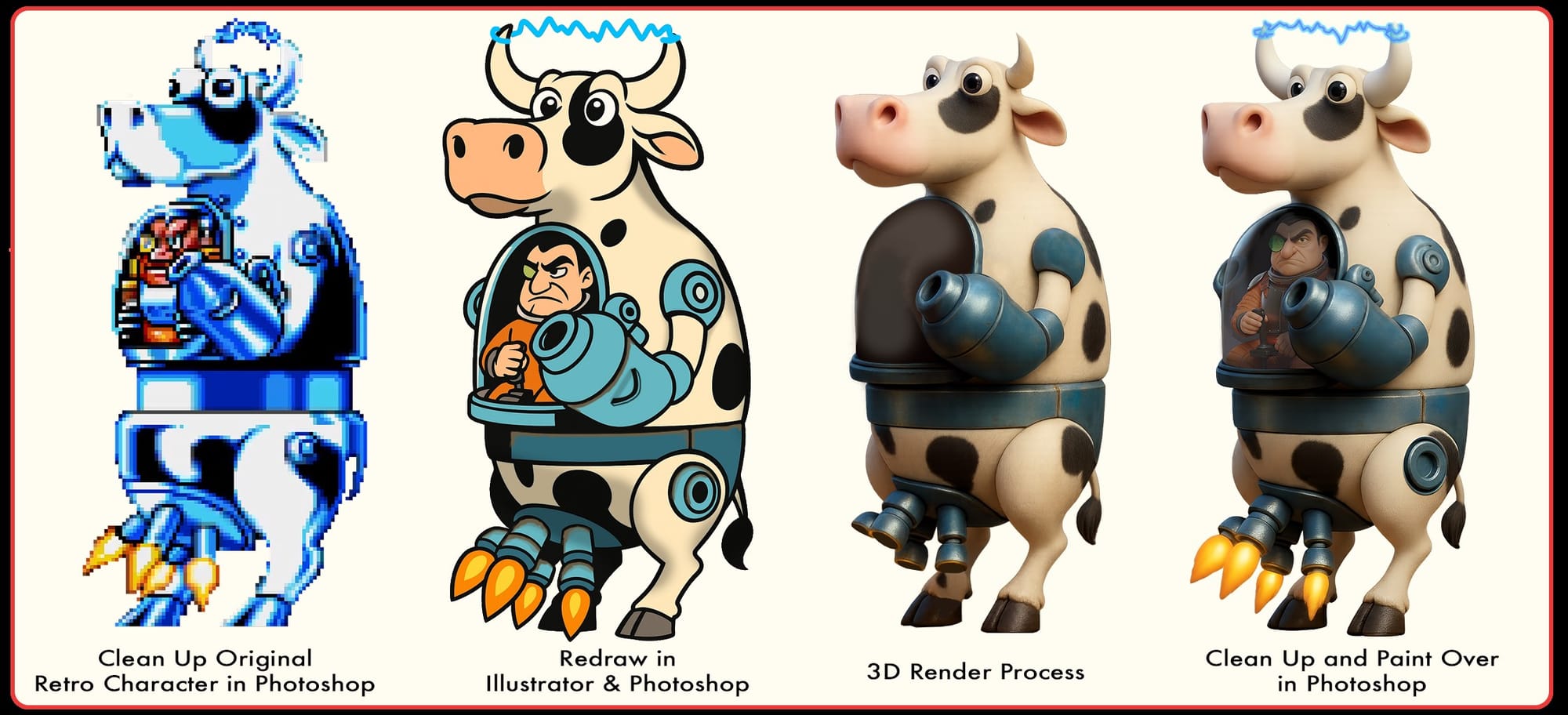
- System 3 released a blog post that explains how the original pixel art characters were redesigned in Illustrator and Photoshop. That image was then used as reference when creating a 3D render in an unspecified program, which was cleaned up again by System 3 in Illustrator and Photoshop.
- Warren Spector, the legendary game designer behind influential immersive sim games like Ultima Underworld, System Shock, and Deus Ex, announced his retirement on LinkedIn.
- Ziggurat finally released the 1.0 multiplayer and quality-of-life update for the Steam versions of Krush Kill ‘N Destroy Xtreme and Krush Kill ‘N Destroy 2: Krossfire. The games are discounted to $3.99 each until August 28, so now is a good time to snag them.
- Tribute Games and Dotemu have teased The Siege of Castle Doom DLC for their retro-inspired beat ‘em up Marvel Cosmic Invasion. It should arrive before Avengers: Doomsday hits theaters later this year. The press release announcing this also confirms that 1.5 million people have played Marvel Cosmic Invasion.
- The original Xbox and its “Duke” controller are getting a 1-to-1 scale Mattel Brick set.
- Fortnite’s next season is “Gaming Legend” themed, and features some classic characters like Mega Man, Crash Bandicoot, Spyro the Dragon, and Sora from Kingdom Hearts.
- Nightdive Studios’ Sin: Reloaded got a September 24 release date.
- Fans are divided on remake Tomb Raider: Legacy of Atlantis’ more modern game features like a focus meter, Polygon reports.
- Clear River Games released a teaser suggesting that there will be some sort of Terranigma-related announcement at the Pixel Arcadia Show on August 24.
- THQ Nordic changed the title of The Guild - Europa 1410 to The Guild 1 Remake: Europa 1410 to better denote that it plays like the first game in the series, which is more focused on economic and political strategy, rather than the life sim-focused The Guild 2 or 3.
I played a few different games this week, including one I can’t talk about yet. These two, I can:
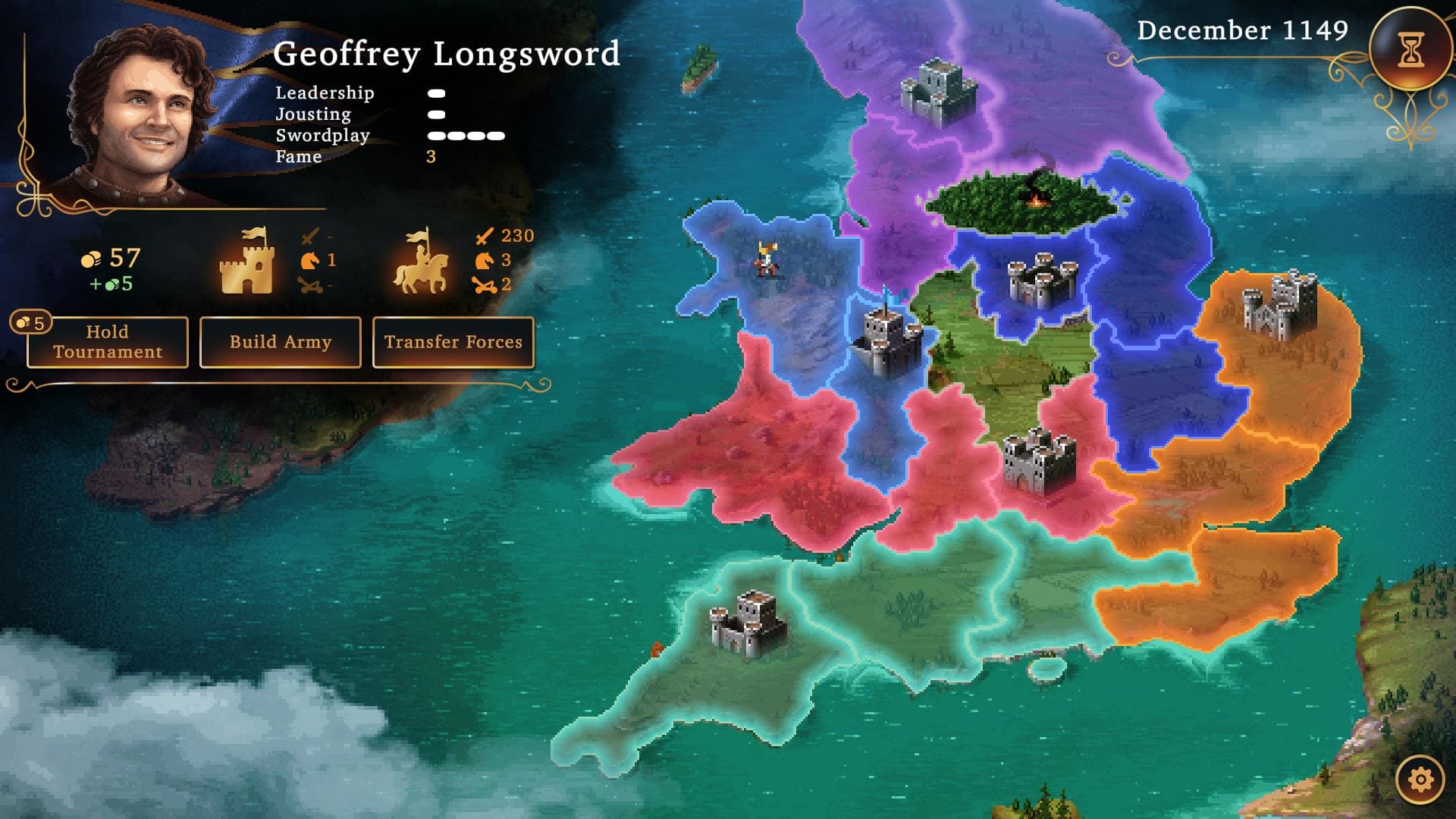
Defender of the Crown: The Legend Returns: Defender of the Crown was an early innovator in cinematic storytelling for games, with its for-the-time elaborate cutscenes impressing Amiga players in the 1990s. Black Tower Basement and Nordcurrent Labs remade the game for modern times with The Legend Returns. While it is certainly quite simple and quaint compared to modern grand strategy games like Crusader Kings 3, I still had a good time with it. The original is included in this remake too, so it is now the best way to play that version.
That’s all for this week! Subscribe to Remastered for free so you don’t miss out on next week’s newsletter. If you want to support independent games media, consider contributing to my Ko-fi as well.