Godzilla: Destroy All Monsters Melee Remastered Interview (Bonus Newsletter)
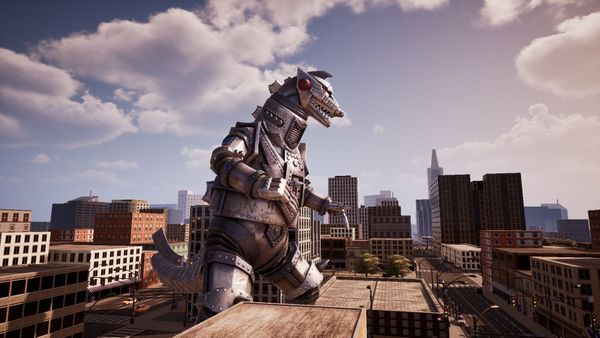
Pipeworks reflects on the legacy of Godzilla: Destroy All Monsters Melee and reveals how the Atari-published remaster came to fruition.

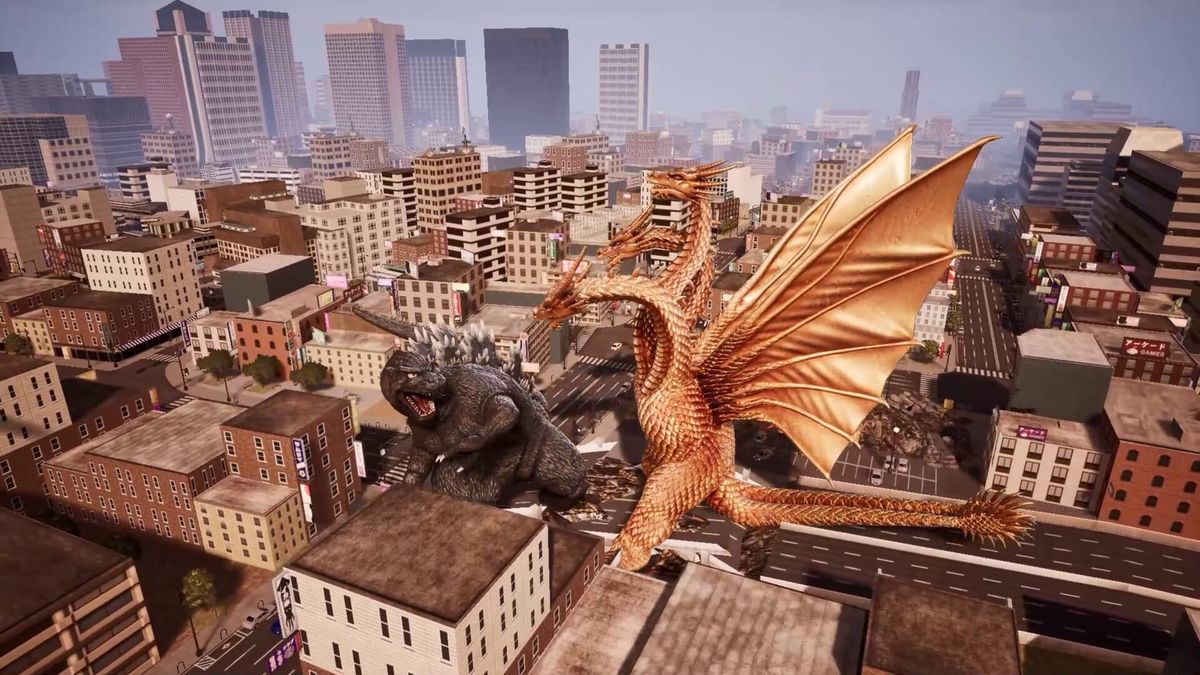
As I mentioned in my newsletter about Godzilla: Destroy All Monsters Melee Remastered earlier this month, I had set up an email interview with Pipeworks Senior Designer Simon Strange about the remaster, but had not gotten his responses by the time of publishing.
I finally heard back from Strange, so I'm sharing the full Q&A as a bonus newsletter. Enjoy!
Tomas Franzese: Godzilla: Destroy All Monsters Melee was Pipeworks Studios’ first game. What are some of the most memorable moments you can recall from the original’s development?
Simon Strange: So many long nights! My daughter was just 1 year old, and I would often work until five, head home to eat and put her to bed, and then go back into the office to work a few more hours. I also remember when we assigned one character to each member of the staff, and they were responsible for learning to play and advocating for that character. That became really fun and motivating.
How does Godzilla: Destroy All Monsters Melee fit into Pipeworks’ legacy as a game studio?
Simon Strange: It’s absolutely the game that built the studio. Without that contract, Pipeworks almost certainly would not have become a viable business. And the success of Godzilla: Destroy All Monsters Melee led directly to a bunch of our subsequent contracts, such as Rampage. Even now 25 years later, with dozens of titles shipped, the Godzilla brawlers are still the games most associated with Pipeworks. So it’s only natural that we celebrate that legacy.
It has been mentioned that the game engine, Spigot, previously served as a roadblock to remastering the game. Can you break down how Pipeworks got content from that engine to work on Unreal Engine and what it felt like when you finally got it working?
Simon Strange: The technology we used is called “Pwk2Fbx”, which converts Spigot files (with extension “.pwk” for Pipeworks) to Fbx files. There was some real wizardry there, and suddenly we had every character model, animation, building, vehicle, and texture up and running in Unreal. The tool even created Unreal level files with all of the buildings scaled, rotated, and positioned correctly. It’s not an exaggeration to say that we didn’t have a realistic development plan at all until that tool was functional. And then, once it was, the remaster seemed inevitable.
Why did you seek out a publisher like Atari for the project?
Simon Strange: Well, Atari was the original game’s publisher, so that wasn’t an especially difficult choice. Remakes and remasters have been increasingly popular in the past several years, but even given that trend, Atari is still a clear leader in that business. They know how to market a game like this. We trusted their intuition on a number of development choices throughout the process. Atari was instrumental in getting the Steam Next Fest demo, for example, which has been a great success.
What were the biggest challenges you encountered during the development of Godzilla: Destroy All Monsters Melee Remastered?
Simon Strange: Oh no, am I going to jinx things if I say that development was actually really smooth? I suppose one thing that was quite challenging was getting the game ready for simultaneous release on so many different platforms. There are just hundreds and hundreds of tiny things to check and validate, so it takes a huge effort from the engineers, production, and QA teams to handle all of that work.
Why do you think Godzilla: Destroy All Monsters Melee has resonated with players for so long? How do you think this remaster will add to that legacy?
Simon Strange: I think, at the core, it’s just a well-made game. The team that made it was very professional, passionate, and committed to proving ourselves and our new studio, and I think you can feel that quality in the final product. And, of course, Godzilla is an amazing property to work with. It has depth, action, a sense of humor, and a passionate, built-in fan base. I think we have created a game that has the depth and quality to hold up over time, and it feels like players agree.
I hope you enjoyed this bonus interview! Remastered is still on its weekly schedule, so expect another newsletter on Thursday. It's about a game where you drive and sometimes steal cars (no, not that one).